The challenge
An iconic brand was losing relevance with 8–12-year-olds in Europe. The marketing team felt its picture of these kids was out of step with today's culture. We were asked for a fresh view of the audience and a way to build it into how the team markets products, not just an audience insights deck. Constraints were tight: no direct research with children, no changes to the product range, and a regional start.
The insight
I led a research phase mapping the cultural and psychological world these kids live in, across TikTok, YouTube, Discord, Roblox, Twitch and Reddit, layered with generational and family data from five European markets.
The pattern was the same everywhere: kids don't see themselves as kids. They want to show off and be cool as much as adults do.
They don't buy toys; they buy social currency.
The brand was selling features and developmental benefits into a market that buys status.
What I did
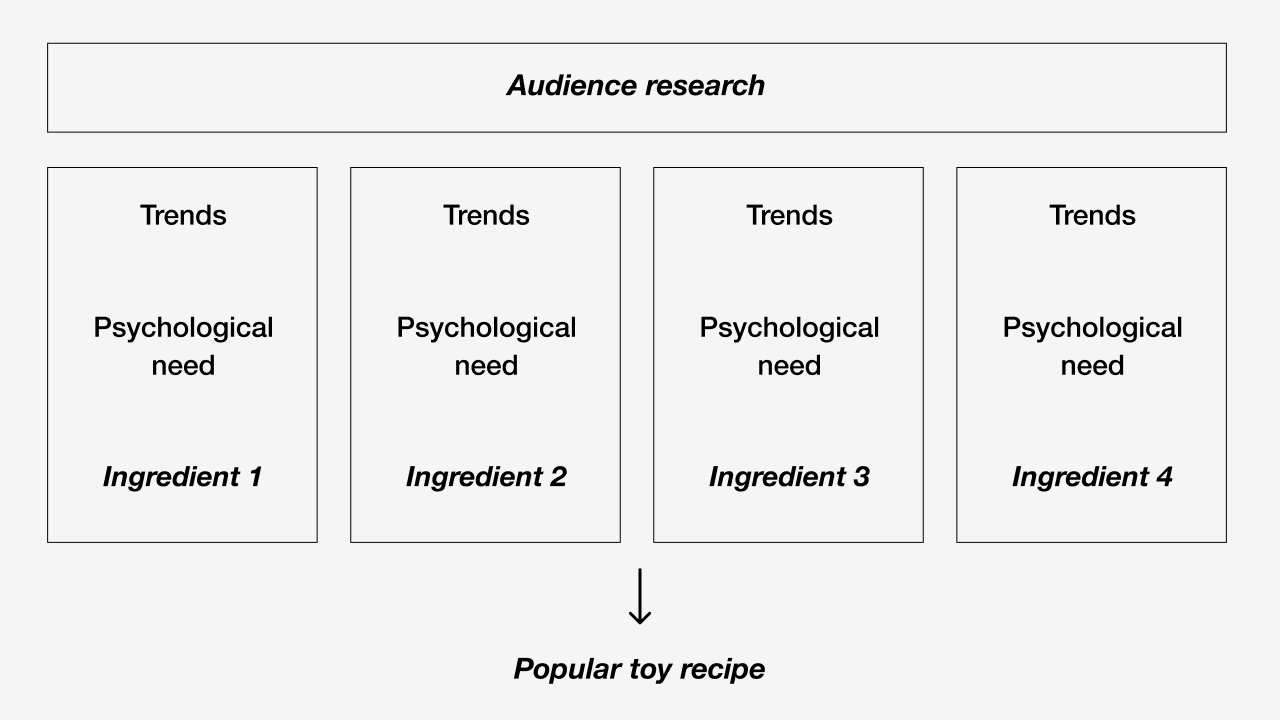
- Built a positioning framework. I turned the research into a reusable "popular toy recipe" combining four psychological need-states with social mechanics that help a product travel through peer culture. Concrete enough to brief from, testable enough to validate.
- Embedded it through workshops. I designed and co-facilitated positioning workshops with the client's executive marketing team: first reshaping their view of the audience through current cultural trends, then using the framework to develop and pitch new product marketing ideas.
- Briefed the creative team for the campaigns and activations built on the framework.
The outcome
- The client adopted the framework to shape how new products are briefed and taken to market.
- The workshop was rolled out to three further European markets.
- The framework is now being tested across Europe.
- The agency was retained to build a 100,000-person live activation to test the new positioning.